
Winter Rain on Bare Dirt: Erosion Control Rules for Middle Tennessee Job Sites
Middle Tennessee's wet season is starting. November averages 3.86 inches of rain in Nashville, and December brings 4.43 inches, about an inch more than October, according to the National Weather Service's 1991–2020 normals for the city. January, February, and March run between 4 and 4.5 inches each, and in most winter months about three days a month bring half an inch of rain or more.
That matters on a job site because winter is when bare dirt stays bare. Grass seed is slow to take in cold soil, crews spend fewer hours on site, and a lot of lots sit graded but idle over the holidays. Every soaking rain on that dirt carries sediment toward the street, the storm drain, and the nearest creek. The rules in Tennessee and Nashville spell out what has to be in place, and most of it comes down to a few habits that are easier to set up now than to fix after the first big storm.
Who the state stormwater permit covers
The Tennessee Department of Environment and Conservation (TDEC) covers construction stormwater under its general permit, TNR100000, usually called the CGP. TDEC issued the final 2026 CGP with an effective date of October 1, 2026, and it runs through September 30, 2031.
The permit applies to construction activity that disturbs one or more acres. It also reaches smaller sites when they are part of a larger common plan of development or sale that adds up to at least an acre of disturbance. That second part is the one that catches builders: a single lot in a subdivision can be under an acre and still fall under the permit because the development as a whole is larger.
If you're not sure whether a lot is covered, ask the developer or primary operator for the permit tracking number. TDEC assigns numbers in the TNR10xxxx series, and active coverage is listed on the department's dataviewer.
What Nashville adds on top
In Davidson County, Metro Water Services (MWS) reviews grading permits and building permits that are referred to it. According to Chapter 4 of the Metro Stormwater Management Manual, a site disturbing more than one acre has to have its Notice of Coverage under the state CGP before a pre-construction meeting can be scheduled and a grading permit issued.
Chapter 6 of the same manual says Metro's erosion prevention and sediment control requirements are, by policy, consistent with the CGP, and that where the two conflict, the more restrictive requirement applies. Other Middle Tennessee cities and counties have their own stormwater programs, so check with the local stormwater or codes office for each job.
Stabilize bare soil on a schedule
The rule that matters most in winter is about how long dirt can sit exposed. Under the 2026 CGP, temporary or permanent stabilization has to be finished within 14 days after construction activity in that part of the site has stopped, temporarily or for good. Steep slopes have to be stabilized within one week.
There are two exceptions that come up in winter:
- Frozen or soggy ground. When snow cover, frozen ground, or soggy ground keeps you from starting stabilization, you start as soon as conditions allow.
- Work restarting soon. If soil work in that area will pick back up within two weeks, temporary stabilization isn't required for that pause.
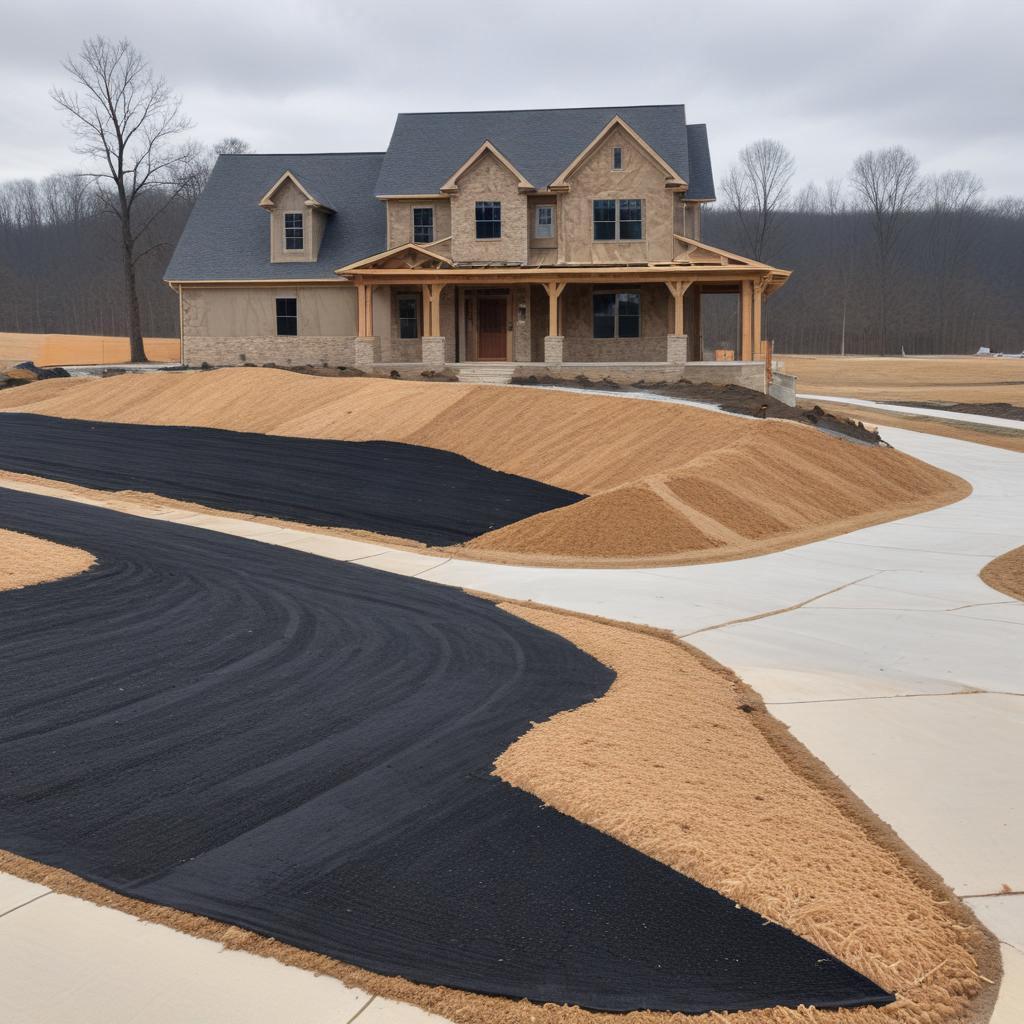
The permit lists temporary seeding, permanent seeding, mulching, geotextiles, sod, and vegetative buffer strips as stabilization options. It also says that when the season would keep vegetation from establishing in time, other stabilization practices have to be used. In a Middle Tennessee December, that usually means mulch, erosion control blankets, or other covers rather than counting on seed alone.
Metro's manual adds a rule for soil stockpiles: a stockpile left undisturbed for 15 days or more has to be stabilized and protected with sediment-trapping measures. A tarp or mulch on the pile and silt fence around its downhill side is a common way to handle it.
One more detail from the CGP: unpacked gravel containing fines, or crusher run, doesn't count as a permanent non-eroding surface. Gravel can help in the short term, but it isn't the final answer for stabilizing a yard.
Keep mud off the street
Mud tracked onto the road is the most visible stormwater problem on a residential job, and it's the one neighbors and inspectors notice first. The CGP requires a stabilized construction access to reduce mud and dirt tracked onto public roads.
Metro spells out the size. Chapter 6 of the Stormwater Management Manual calls for a stabilized stone pad at any point where traffic leaves a site onto a public right-of-way, street, alley, or parking lot. The pad has to be:
- 2- to 3-inch stone
- 6 inches thick
- At least 100 feet long and 20 feet wide
In winter, construction entrances fill with mud quickly. Plan to top-dress the pad with fresh stone when the voids fill, and scrape the street the same day if mud gets out.
Maintain silt fence and inlet protection after every rain
Silt fence, storm drain inlet protection, sediment traps, and check dams only work while they have room to hold sediment. The CGP says sediment has to be removed from silt fences, sediment traps, sediment basins, and other sediment controls when their design capacity has been reduced by 50 percent.
In a wet winter, that can mean cleaning out the fence line several times. Walk the perimeter after each heavy rain and look for:
- Sediment piled halfway up the fabric
- Fence that has been undercut, knocked down, or driven over
- Gaps at the ends where water runs around the fence instead of through it
- Inlet protection that is clogged, torn, or has been moved
The CGP also allows measures that interfere with work to be removed at the start of the workday, but they have to be put back at the end of the workday.
Inspections on permitted sites
For sites under the CGP, the permit requires inspections at least twice a week, at least 72 hours apart. Each one documents whether the erosion and sediment controls in the stormwater pollution prevention plan (SWPPP) are installed and working.
That schedule changes in two ways worth knowing over the holidays:
- Temporarily stabilized areas. Where a site, or part of it, has been temporarily stabilized, inspections drop to once a month until construction activity resumes. Stabilizing a site before a long holiday break can cut down on inspection trips.
- Sites over 50 acres. Projects disturbing more than 50 acres at one time also have to inspect after any rain of more than half an inch in 24 hours. That inspection can count as one of the twice-weekly inspections.
Concrete washout and site waste
Winter pours still produce washout. The CGP inspection form asks whether a concrete washout facility on site is clearly identified and maintained, and Metro's manual requires grading permittees to control site wastes, including discarded building materials, concrete truck washout, chemicals, litter, and sanitary waste. Keep washout in a lined, marked area away from inlets and ditches, and keep dumpsters covered so rain doesn't wash debris across the lot.
A winter stormwater checklist
- Confirm whether each site falls under the state CGP, including lots that are part of a larger development.
- Find the permit tracking number and the SWPPP, and know who is doing the inspections.
- Check the construction entrance, and in Nashville make sure it meets Metro's stone, thickness, and size requirements.
- Stabilize bare areas within 14 days after work stops, and steep slopes within one week. Use mulch or blankets when seed won't take in cold weather.
- Cover and protect any soil stockpile that will sit for 15 days or more.
- Clean out silt fence and sediment traps before they're half full.
- Repair fence and inlet protection that has been damaged or moved.
- Set up a marked concrete washout area away from drains.
- Stabilize what you can before the holiday break, and keep up the inspection schedule while you're away.
Get ready for a wet winter with Music City Building Supply
Music City Building Supply is located at 504 Holtsford St, Lawrenceburg, TN 38464. Before the next stretch of winter rain, stop by or visit musiccitybuildingsupply.com to see what's currently available for your next build or remodel.
Sources referenced: National Weather Service Nashville, Nashville climate normals (1991–2020); Tennessee Department of Environment and Conservation, NPDES Stormwater Construction Permit page and 2026 General Permit TNR100000 for Stormwater Discharges Associated with Construction Activities; Metro Nashville Water Services, Stormwater Management Manual, Chapter 4 (Permitting Procedures) and Chapter 6 (Technical Guidelines and Criteria).Need materials for your next project?
We'll source it and get you a fast, no-obligation quote.