
Where Deck Joist Tape Pays (and Where It Doesn't)
A strip of tape cannot rescue a bad ledger detail. It can, however, keep rainwater out of the narrow horizontal surfaces and screw penetrations that stay wet long after the rest of a pressure-treated deck frame looks dry. That difference is the whole buying decision.
Deck joist tape is an optional durability layer, not a structural connector, preservative treatment or complete flashing system. The useful question is not whether every deck needs it. The useful question is whether a particular surface collects water, gets pierced by fasteners and will be difficult to repair after the decking goes down.
Spend the tape where water actually sits
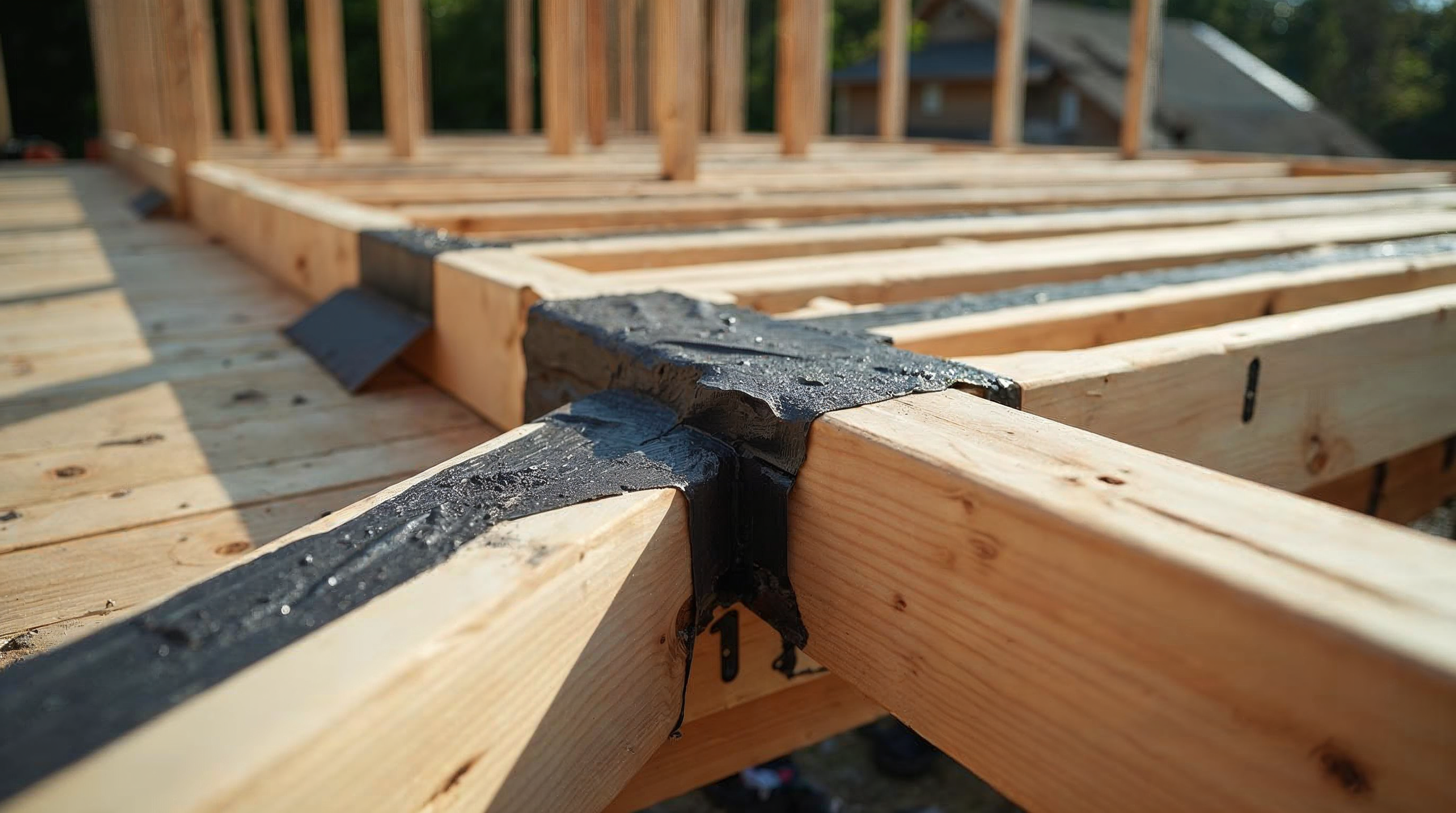
The best return is usually on the tops of wood joists. Every deck-board fastener passes through that surface, and the board above limits sun and airflow. TimberTech's joist-tape instructions call for clean, dry lumber, firm pressure and a wrinkle-free bond. Those requirements matter more than the label on the roll. Tape laid over wet treatment residue, sawdust or rough splinters may look finished while never fully bonding at the edges.
Stair stringers deserve the same attention. Their cut geometry creates several exposed horizontal shoulders, and tread fasteners add more penetrations. Both Deckorators and Trex Protect list stringers, blocking, ledgers and other deck-framing surfaces among their intended applications. That is product guidance, not permission to cover every face. On vertical sides that shed water and can dry, extra tape often adds labor without protecting the surface that takes the abuse.
Built-up beams need a width decision before they need a brand decision. A narrow joist roll does not cover the crown of a double beam. Deckorators specifies 1-5/8-inch tape for a single joist and 3-1/8-inch tape for a double joist or beam. Trex Protect lists those same joist and beam widths and an 11-inch rim tape for rim joists, stairs and flat-blocked surfaces. Measure the actual assembly, including any cap or overlap detail, instead of multiplying the joist count by one generic roll coverage number.
| Framing location | Tape earns its keep when… | Do not confuse it with… |
|---|---|---|
| Joist tops | Decking will trap repeated wetting around fasteners | Straight lumber, correct spacing or approved fasteners |
| Double beams | The full top surface can be covered without creating a water pocket | Proper beam assembly and bearing |
| Stair stringers | Cut shoulders and tread fasteners remain exposed to runoff | Field treatment of cut preservative-treated lumber |
| Blocking and rims | The top is flat, exposed and later concealed | Ventilation and a drainage path |
| Ledger area | Tape is one compatible layer in a planned wall-to-deck transition | The required ledger flashing, WRB integration or structural attachment |
The ledger is the place to be least casual. The American Wood Council's DCA 6 deck guide, published in 2018 and based on the 2015 IRC, treats corrosion-resistant flashing, compatible hardware and field treatment of cuts as separate requirements and practices. A roll sold as “joist and flashing tape” does not erase those separate jobs. Use the current locally adopted code, the approved plans and the tape manufacturer's instructions for the actual assembly; do not cite an older deck guide as the governing code for a 2026 project.
Put it in the takeoff before the frame is wet
Joist tape is easiest to omit at estimating and hardest to install after an afternoon storm. Decide on it while building the material package, then schedule application after the framing is complete, clean and dry but before decking is staged across the joists.
A practical tape takeoff should identify:
- total linear feet of single joists, wider beams, rims or flat blocking, stair stringers and planned overlaps; the roll width for each surface; compatible scissors or utility blades; a hand roller if the product calls for firm pressure; and enough dry time in the sequence to clean and inspect the framing before coverage.
That single line forces the important conversation: what gets taped, what width covers it, and who owns the prep. It also prevents a crew from using narrow joist tape as a patchwork beam cap or applying tape to saturated lumber just because the decking delivery has arrived.
There are also clear cases where the money belongs elsewhere. An aluminum or other non-wood substructure does not need wood-rot protection; TimberTech says its aluminum framing does not require joist tape. A wood frame with unresolved drainage, incompatible metal or sealant, untreated field cuts, or a leaking ledger transition needs those defects corrected first. Tape should protect a sound assembly, not hide an unfinished one.
For a Middle Tennessee deck package, Music City Building Supply can help separate single-joist tape from beam and rim widths before the order is released. Call 615-385-7777 with the framing layout and intended decking system; the useful review is the tape-width and coverage check, not a generic “add one roll” allowance.
Written and technically source-reviewed by Mason for MCBS using the linked manufacturer instructions. Operator context comes from John Adams, an MCBS founder with more than 40 years in construction. Material AI assistance was used in research and drafting; product instructions and locally applicable requirements control.Sources
Need materials for your next project?
We'll source it and get you a fast, no-obligation quote.