
Tile Over Concrete Slab Columbia TN Guide
Start With the Slab, Not the Tile
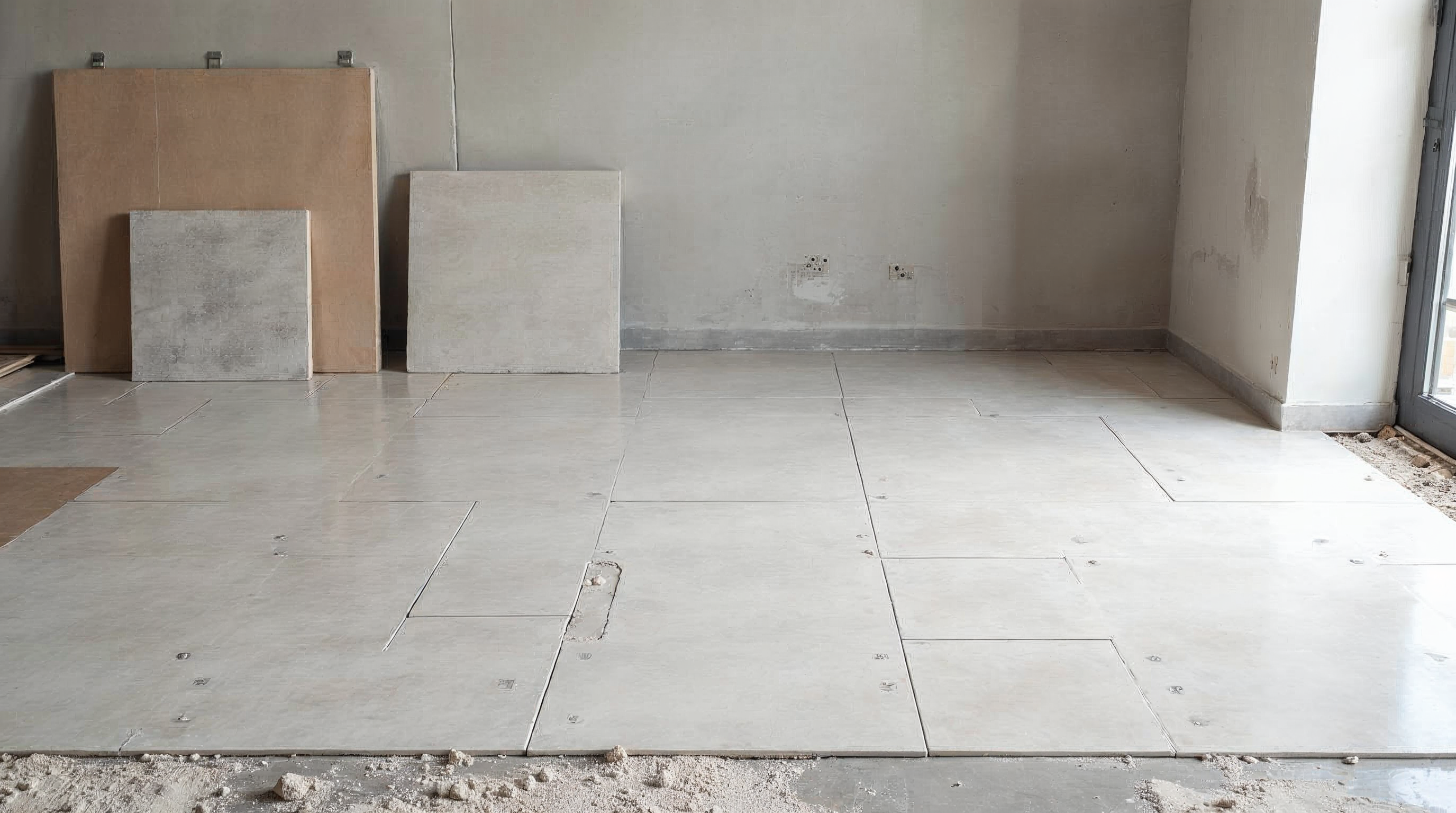
A successful tile over concrete slab Columbia TN project starts below the finished surface. Concrete can look dry and solid while still holding moisture, carrying old sealers, or moving at cracks and control joints. Before buying mortar or opening tile boxes, inspect the slab for cracks, spalls, coatings, paint, oil, weak surface material, and uneven areas. That first walk-through helps separate simple preparation from conditions that need repair or professional review.
In Columbia TN and Maury County, this matters for garages converted to living space, slab-on-grade additions, kitchens, laundry rooms, and other remodels. The safest plan is to match the tile, slab condition, membrane, and mortar as one system. Music City Building Supply can help buyers assemble the visible materials, but the installer still needs to verify the substrate and follow the selected manufacturers’ instructions.
- Mark every visible crack and concrete joint
- Identify paint, sealer, adhesive, or curing-compound residue
- Check the floor for humps, dips, and abrupt edge changes
- Note wet areas, plumbing leaks, and exterior drainage concerns
Test Moisture and Classify Cracks
A slab that feels dry is not automatically ready for tile. Concrete contains moisture from placement and can also receive moisture from the ground, drainage problems, or leaks. Moisture testing should follow the method and limits required by the mortar, membrane, or mitigation product being used. Stone World recommends evaluating concrete moisture before installation, while LATICRETE’s technical guidance shows why the acceptable condition can vary by the exact setting system.
Cracks also need classification before they disappear under a finished floor. A non-structural shrinkage crack may be a candidate for a compatible crack-isolation or uncoupling membrane. A crack with vertical displacement, continuing movement, or signs of a larger foundation issue is a different problem; covering it with tile does not repair the slab. Existing control and movement joints must be planned into the assembly rather than rigidly buried without an approved detail.
- Record moisture-test results in the job file
- Use one compatible manufacturer-approved assembly
- Treat active or displaced cracks as a repair question
- Plan movement locations before finalizing the tile layout
Prepare a Clean, Flat Bonding Surface
Surface preparation is where many low-callback installations are won. LATICRETE states that curing compounds, sealers, and coatings can interfere with direct adhesion and calls for mechanical removal when they are present. Sweeping and mopping are not substitutes for removing a bond breaker. Grinding, shot blasting, patching, or another approved method may be required, depending on the contaminant and the products selected for the job.
Flatness becomes especially important with large-format porcelain tile. Bigger pieces do not bend to follow slab irregularities, so humps and dips can create uneven edges, poor mortar contact, and a difficult layout. Check the slab with an appropriate straightedge, correct high and low areas with compatible materials, and allow repairs to cure as directed. The goal is a sound, clean, properly profiled plane—not simply a floor that appears level from the doorway.- Remove dust after mechanical preparation
- Patch spalls and voids with tile-compatible repair material
- Verify primer requirements before applying any primer
- Recheck flatness after repairs and before setting tile
Match Mortar, Membrane, and Tile
Choose thin-set mortar or large-and-heavy-tile mortar by reading the product data for the tile type, format, concrete substrate, exposure, and membrane. Porcelain is low-absorption, and large pieces can require a mortar designed for their size and weight. Follow the manufacturer’s water ratio, mixing, slake time, open time, trowel guidance, and coverage checks. Keying mortar into the slab and checking coverage during installation are more reliable than assuming one trowel works for every tile.
Movement accommodation belongs in the material plan too. Perimeter joints, changes of plane, and other designated movement locations need the sealant or profile required by the approved system rather than ordinary grout. For a tile over concrete slab Columbia TN remodel, buy the full package together: tile, compatible mortar, grout, membrane if specified, movement-joint material, transitions, and repair products. Contractors and DIYers across Maury County can contact Music City Building Supply before pickup to check available tile and project materials, then confirm the final assembly with the installer and product documentation.
Sources
Need materials for your next project?
We'll source it and get you a fast, no-obligation quote.