
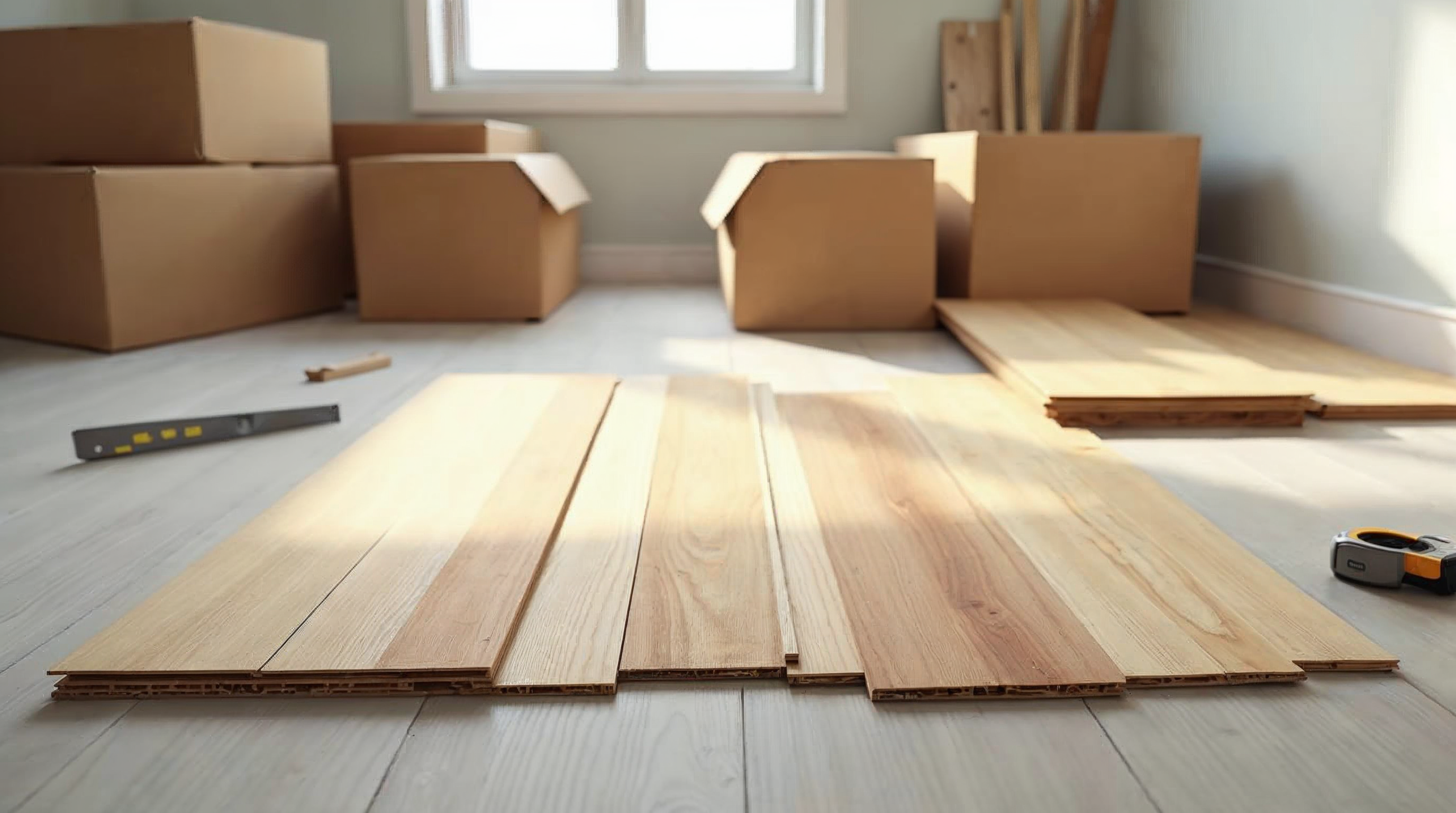
Inspect Hardwood Cartons Before the First Board Goes Down
One bad board can be culled. A milling or color problem discovered after the first rows are fastened or glued can stop the room, strand the crew, and turn a clean material question into an installed-floor dispute. The useful inspection happens before installation makes the evidence harder to separate.
For hardwood flooring delivered across the Nashville and Columbia, TN service area, the release point should be deliberate: the exact product has arrived, representative cartons have been opened under good light, and the installer has decided the material is fit to rack—not merely that the carton label looks right.
Run a carton-release check, not a box-count check
The instructions for the exact floor control. Return limits, acceptable natural variation, acclimation, moisture conditions and defect-claim rules differ by manufacturer and product. National Flooring Products' engineered-hardwood instructions, for example, say its decision not to proceed must be made within the first 10% or 100 square feet of opened boxes, whichever comes first. That is a product-specific rule, not a universal allowance, but it shows why a crew should find and read the current instructions before opening the whole order.
Use this release sequence while the material can still be identified and separated:
- Match the product name, color, construction, plank dimensions and lot or production information on the cartons to the approved order. Photograph representative labels before wrappers are discarded.
- Check the manufacturer's current installation and claim instructions. Write down any limit on cartons opened, material installed, notice timing or acclimation conditions.
- Open a representative group of cartons in adequate light. Compare face finish, color range, milling, width and thickness, board edges, tongue-and-groove integrity, end joints, bow and visible damage.
- Dry-fit boards from several cartons. Confirm the joints engage normally, adjacent boards sit at a consistent height, the expected color and length range is present, and coordinating trim actually belongs with the floor.
- Separate questionable boards and document the issue without fastening, cutting or gluing them. Keep unopened cartons and labels tied to the same lot while the dealer or manufacturer reviews the question.
- Release the material only when the installer can state what was checked, what natural variation is acceptable for that product, and whether the remaining quantity still supports the planned layout and retained repair stock.
Mixing cartons is part of both inspection and layout. Bruce's Dogwood installation instructions recommend laying out boards from several cases during acclimation to review lengths, grain and color, then mixing boards from at least three to four boxes during installation. Do not turn that product-specific number into a rule for every floor; use it as the reason to look beyond the first attractive carton.
A stop decision should be boring and early. A different product code, a finish range outside what was approved, repeated damaged tongues, inconsistent fit or a milling issue across sampled cartons deserves a pause before more material is opened. A few boards with normal natural variation may simply need thoughtful placement. The installer and the exact product instructions—not a generic defect percentage remembered from another brand—should settle that distinction.
This check also keeps three separate problems from being confused. Shipping damage is not the same as a manufacturing defect. Natural color and grain variation are not the same as a wrong color or lot. A flatness or moisture problem in the room is not corrected by replacing sound flooring. Photographing labels, sampled boards and a short dry-fit gives the dealer or manufacturer something useful to review instead of a finished floor and a discarded wrapper.
Before a hardwood order is released for delivery, Music City Building Supply can help check whether the product, carton information and trim package are complete enough for the installer to perform this inspection. Call 615-385-7777 with the exact product and planned installation method. The best time to resolve a mismatch is while the boards are still loose and identifiable.
Written and technically source-reviewed by Mason for MCBS using the linked manufacturer guidance. Operator context comes from John Adams, an MCBS founder with more than 40 years in construction. Material AI assistance was used in research and drafting; the instructions for the exact flooring product control.Sources
Need materials for your next project?
We'll source it and get you a fast, no-obligation quote.