
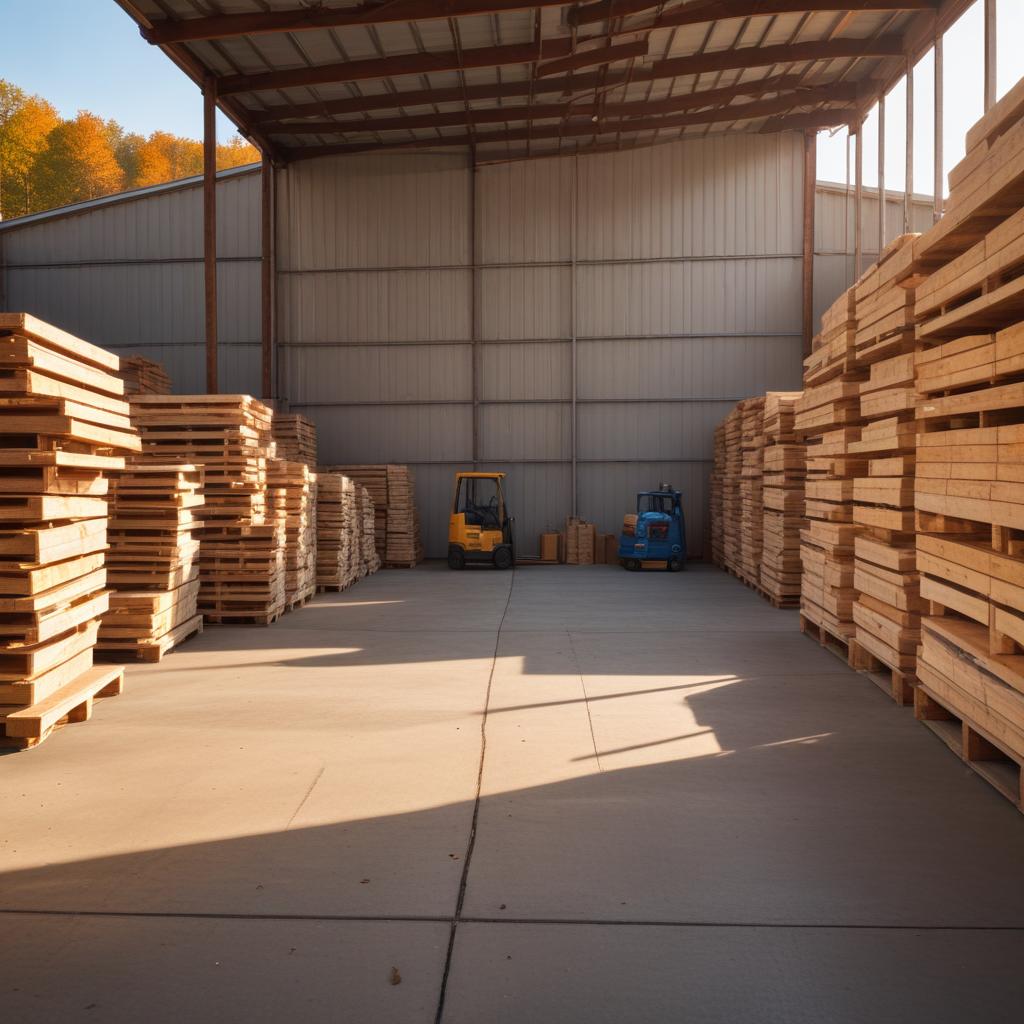
How to Buy and Vet Surplus Building Materials in Middle Tennessee
Surplus and overstock yards can stretch a remodel or new-build budget—if you know how to read labels, judge lot condition, and plan delivery and storage. This guide is for builders, remodelers, and serious DIYers across Davidson, Williamson, Maury, Rutherford, Marshall, and nearby Midstate counties. It focuses on how to evaluate lots on the ground (see our related Fall Staging post for lead-time and seasonal planning).
Residential construction input prices have stayed elevated into early 2026 even as some softwood lumber indexes softened (NAHB). Surplus helps when the lot matches the job—not when “cheap” material fails inspection, code, or moisture checks.
What “surplus” and “overstock” usually mean
An overstock or surplus yard typically sells material already in the channel: manufacturer overruns, canceled orders, distributor excess, discontinued lines, and usable project leftovers (build-construct.com overview). Stock is often first-quality—or close—but it may have sat wrapped, partially exposed, or moved more than retail inventory.
Treat every bunk as a separate lot. Ask origin, time on site, and whether it is structural, appearance-grade, seconds, or as-is. Call for current availability; surplus turns over—never assume specific SKUs.
Read the stamps and tags before you load
Structural softwood lumber (grade stamps)
For load-bearing framing, insist on a legible grade stamp from an accredited system. Under the American Softwood Lumber Standard (PS 20), ALS-program grade marks normally show five elements: mill identification, grading agency symbol, species or species group, grade, and dry vs. green when manufactured (SBCA buyer practices; NIST PS 20).
Checklist:
- Agency + mill — Recognized grading program, not a random ink stamp.
- Species / group — SPF, DF-L, Southern Pine, and look-alike groups are not interchangeable for design values (SBCA).
- Grade — Match stud, Select Structural, No. 1, No. 2, etc., to the engineer or code—not the cheapest bunk.
- Moisture designation — “Dry” softwood lumber maxes at 19% moisture content; some rules allow KD 15 (generally 15% max) (USDA FPL Wood Handbook).
If stamps are missing, illegible, or look unauthorized, do not treat the lot as structural with published design values unless your building official or engineer accepts documentation (SBCA). Prefer mill or inspection certificates when stamps are questionable.
Plywood and OSB (panel trademarks)
On structural panels, look for an APA (or equivalent) trademark showing product standard (PS 1 / PS 2), grade or rated use, bond classification, Performance Category/thickness, and span rating. A sheathing mark such as 32/16 is maximum support spacing for roof / subfloor with the strength axis across supports (APA plywood guidance). Panels called “CDX” are typically Exposure 1—construction moisture, not permanent outdoor exposure (APA). Reject delamination, crushed edges that erase the stamp, or panels with no usable mark for structural work.
Treated lumber (end tags)
For decks, posts, sill plates, and ground contact, read the end tag, not the sales nickname. Compliant tags should show AWPA U1, a Use Category (e.g., UC3B above-ground exterior, UC4A general ground contact), preservative name/code, and retention; code-intended product should also carry an ALSC-accredited quality mark (AWPA for homeowners). Do not put above-ground-only stock in ground contact—UC4A or higher is the general ground-contact requirement (AWPA).
Inspect lot condition like a superintendent
Surplus is not automatically damaged—but weather and handling vary. Pull random pieces from each bunk, verify stamps match the order, and flag wane, check, bow, twist, cup, and transit damage (SBCA; surplus-yard quality notes).
On the yard floor:
- Framing — Sight long edges; reject systematic twist/bow when walls must plane true.
- Sheathing — Delamination, soft spots, intact span stamps.
- Treated — Use Category; splits that open the treatment zone; heavy checking.
- Doors, trim, cabinets, flooring — Prefer covered stock; reject water stains, swollen cores, and broken packaging on finish faces.
- Hardware / fasteners — Boxed product is often strong; verify mixed-bin grade/finish and rust (surplus-yard guidance).
Bring a cut list—odd lengths only help if they map to the takeoff. Confirm as-is terms, holds, and volume/bundle pricing before loading.
Moisture, delivery, and storage
Moisture is where a “great price” becomes a callback. Carry a meter and spot-check against the grade mark and end use.
General practice (not a substitute for project specs):
- Framing / enclosure — Dry softwood is capped at 19% MC; many assemblies target ≤19% before closing walls (USDA FPL; Canadian Wood Council BP-6).
- Interior flooring and millwork — Industry guides commonly cite roughly 6–9% MC for wood flooring and interior doors; exterior door components often nearer 9–14%, climate-dependent (Wagner Meters; door MC practices).
- Acclimation — Stabilize finish goods after wet trades, nearer service HVAC conditions; take multiple meter readings (Wagner).
- Stage covered, level, and well-drained; keep stacks off wet soil with airflow—avoid trapping moisture under tight, unventilated tarps (CWC).
- Keep protective poly intact when it keeps bunks dry; vent wraps that trap condensation after rain.
- Doors and finished interiors — Do not store timber doors outdoors even under cover; keep them flat, dry, and ventilated indoors on original bearers (timber door care). Flooring and cabinets belong in conditioned space, not on an open Midstate pad through a humid week.
- Photograph bunks and meter readings at pickup; note shortages or damage on the ticket before leaving the yard.
Plan covered drop zones around Columbia, Nashville, Franklin, Spring Hill, and Murfreesboro. Confirm truck access, forklift needs, and pickup vs. jobsite delivery.
A simple Midstate surplus shopping sequence
- Quote in writing: species, grade, dimensions, treated Use Category, panel span rating, quantities.
- Ask storage (covered vs. open) and structural / seconds / as-is status.
- Visit with cut list, meter, tape, camera, and tie-downs.
- Verify stamps/tags on random pieces per bunk; meter moisture; reject rot, delamination, and illegible structural stock.
- Confirm load-out weight, tarp needs, and return policy (many surplus sales are final).
- Stage and cover the same day; move finish goods indoors first.
Where Music City Building Supply fits
Music City Building Supply is a builder-run surplus and wholesale yard in Columbia, TN, serving Nashville and Middle Tennessee. Public categories include lumber and plywood, roofing, siding, doors, windows, trim, flooring, cabinets, and related materials. The yard sources surplus, overstock, and closeouts and offers pack/bundle pricing, pickup, and jobsite delivery—call for current availability; do not assume any SKU is in stock.- Address: 1230 Industrial Park Road, Columbia, TN 38401
- Phone: 615-385-7777
- Hours: Mon–Fri 9AM–4PM, Sat 9AM–2PM
- Web: musiccitybuildingsupply.com
Bring a cut list and stamp checklist. A good surplus buy still looks good after the inspector, the meter, and the first rain.
Sources
- Structural Lumber Buyer Best Practices — Structural Building Components Association (accessed Sep 23, 2026, CDT)
- NIST Voluntary Product Standard PS 20 — American Softwood Lumber Standard (accessed Sep 23, 2026, CDT)
- USDA Forest Products Laboratory — Wood Handbook, Ch. 13 (moisture / dry lumber) (accessed Sep 23, 2026, CDT)
- APA — Plywood selection, trademarks, and span ratings (accessed Sep 23, 2026, CDT)
- AWPA — Treated wood end tags and Use Categories (accessed Sep 23, 2026, CDT)
- Overstock Lumberyards: How Surplus Building Material Yards Work (accessed Sep 23, 2026, CDT)
- Wagner Meters — Acceptable moisture levels in wood (accessed Sep 23, 2026, CDT)
- Canadian Wood Council — Managing Moisture and Wood (BP-6) (accessed Sep 23, 2026, CDT)
- NAHB — Building material price growth (Jan 2026) (accessed Sep 23, 2026, CDT)
- Music City Building Supply — public site / contact (accessed Sep 23, 2026, CDT)
Need materials for your next project?
We'll source it and get you a fast, no-obligation quote.