
Fiber Cement Siding Repair Columbia TN Guide
Repair One Board or Replace the Wall?
A cracked plank does not automatically mean an entire elevation needs new siding. Individual fiber cement boards can often be replaced when damage is isolated and the wall behind them remains dry and sound. That makes targeted repair a practical option after an impact, a localized installation failure, or damage limited to one course. Before ordering material, inspect the whole wall around the failed area rather than judging only the visible crack.
Wider replacement makes more sense when the problem repeats across the elevation, trim is failing, boards are moving in several places, or deterioration appears around windows and doors. Atomic Exteriors also notes a key buying problem: a partial repair works best when the original profile and finish are still available. For a fiber cement siding repair Columbia TN project, confirm the manufacturer, plank width, texture, exposure, and color before removing anything.
- Targeted repair: isolated damage, sound wall, available matching plank
- Broader replacement: repeated leaks, widespread movement, failed trim, hidden deterioration
- First material check: profile, texture, thickness, exposure, finish, and quantity
Inspect What Is Behind the Damage
Fiber cement is the outer cladding, not the entire water-management system. Today's Homeowner recommends checking the underlayment and backer material when a board has suffered ongoing water exposure. If the weather barrier, sheathing, or flashing is damaged, correct that condition before installing a new plank. Covering a wet or deteriorated assembly only hides the reason the siding failed.
On Columbia TN and Maury County jobs, make the inspection methodical. Look at transitions near windows, doors, corners, roof-to-wall intersections, and the lowest courses. Check whether butt joints have flashing behind them and whether edge gaps are properly sealed. Do not turn a small repair into a blind patch; document the opened area so the homeowner or project manager understands what was found.
- Inspect the weather-resistive barrier behind the damaged plank
- Check flashing at openings and siding joints
- Look for soft sheathing, staining, loose fasteners, or repeated movement
- Resolve the source of water or impact damage before closing the wall
Remove and Replace the Plank Carefully
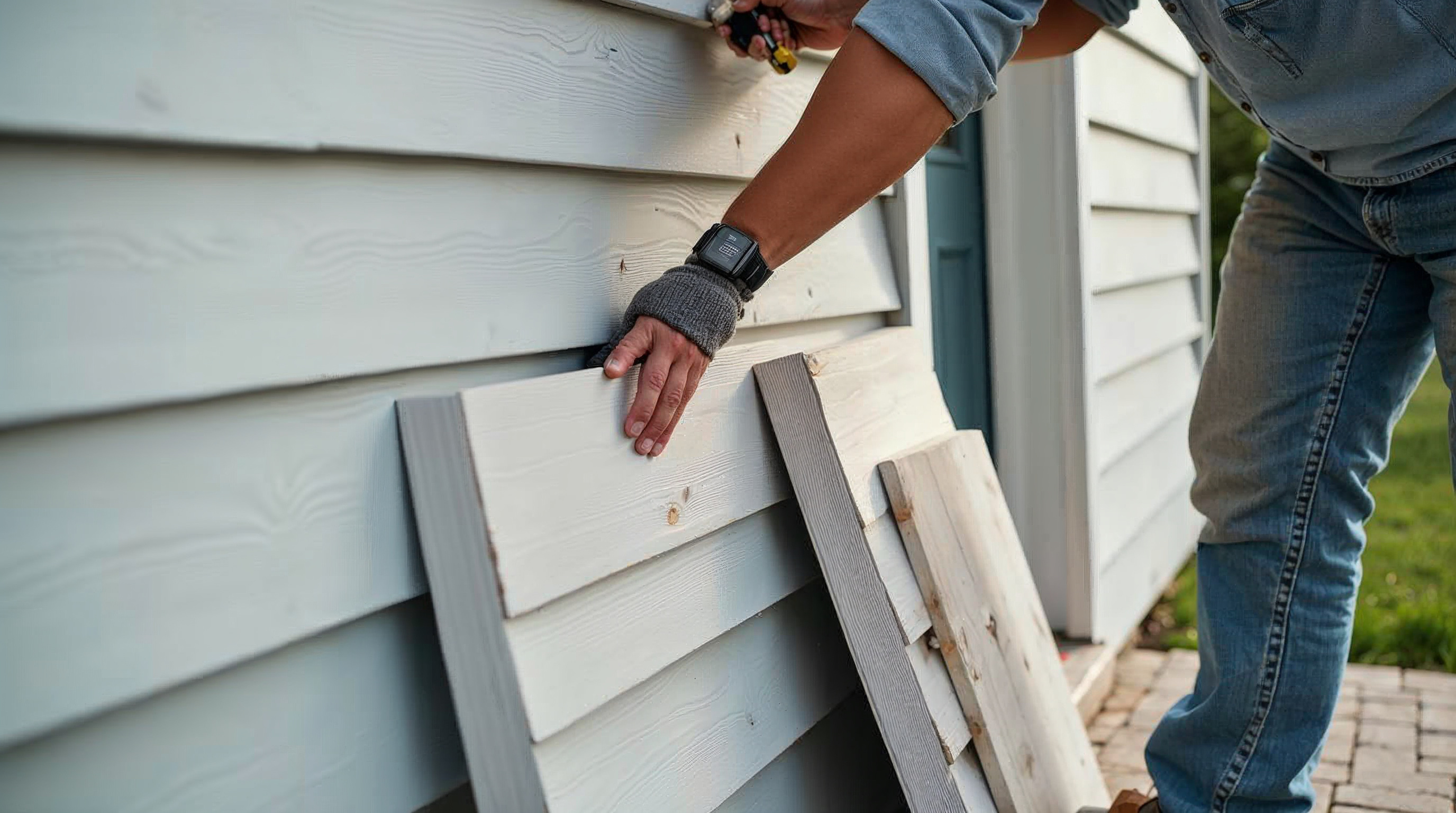
Fiber cement lap siding is commonly blind-nailed near the top of each plank, with the next course covering the fasteners. Today's Homeowner advises gently lifting the overlapping course and using shims as a buffer while removing or cutting the damaged board's nails. The goal is to free the failed plank without cracking the good siding above it. If several courses come off, reinstall from the bottom upward.
Measure the reveal, or visible height of each course, on an undamaged area before setting the replacement. A chalk line can help keep the repaired course consistent across the wall. The final plank may require face-nailing when the covered nailing area cannot be reached; finish exposed nail heads according to the siding and coating instructions, then restore the required sealant details. Always follow the current instructions for the exact product being installed.
- Record the existing plank profile, exposure, and joint locations.
- Lift the overlapping course gently and protect it with shims.
- Remove the damaged plank and inspect the wall behind it.
- Cut and fit the replacement without forcing adjacent boards.
- Restore fasteners, flashing, coating, and sealant details.
Build a Complete Repair Material Package
A repair can stall even when the replacement plank is on hand. Contractors should package the board with the compatible accessories needed to close the wall correctly. Depending on the existing assembly and manufacturer instructions, that may include joint flashing, corrosion-resistant fasteners, approved sealant, touch-up coating, shims, and weather-barrier repair materials. Matching the visible board while skipping concealed details is not a complete repair.
Fiber cement is already familiar in the local market; L & L Contractors lists James Hardie fiber cement siding among its Columbia TN services. Music City Building Supply can help Maury County builders, remodelers, and DIY buyers compare available siding profiles and assemble a practical repair package. Bring a clean sample or clear measurements when possible, and confirm compatibility before the crew opens the wall.
- Replacement plank with matching profile and texture
- Manufacturer-compatible fasteners and sealant
- Joint flashing or weather-barrier repair materials as needed
- Matching field paint or approved touch-up product
- Extra material for breakage, test fitting, and future repairs
Before your next Columbia TN siding repair, inspect the full wall, verify the replacement profile, and buy the complete accessory package. Contact Music City Building Supply to check current fiber cement siding options for your Maury County project.
Sources
Need materials for your next project?
We'll source it and get you a fast, no-obligation quote.