
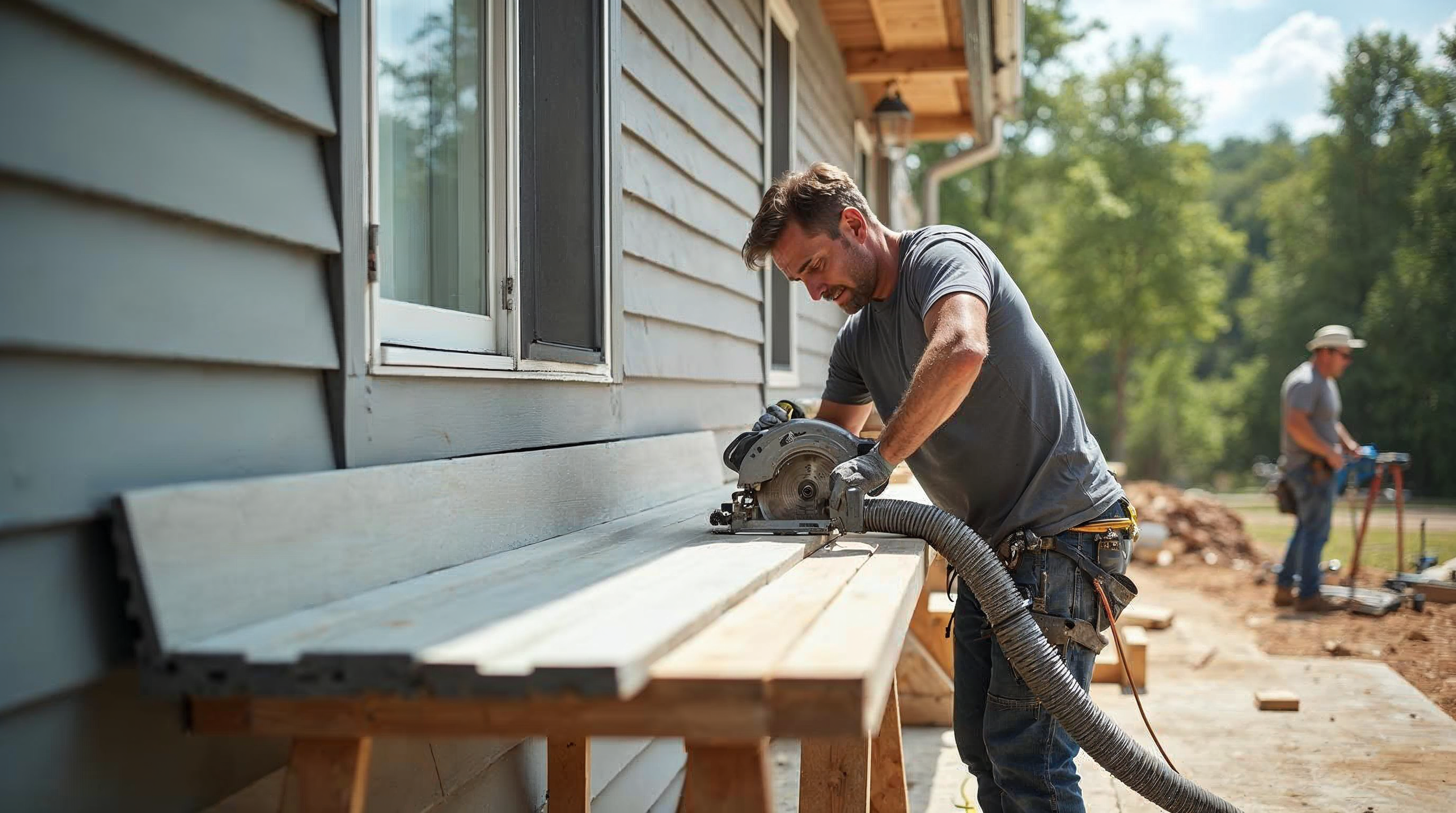
Fiber Cement Cutting Guide for Columbia TN
Why Cutting Method Matters
Fiber cement siding is durable once installed, but cutting it creates fine dust that can contain respirable crystalline silica. OSHA requires construction employers to limit exposure, while NIOSH documents practical engineering controls for power-saw cutting. For Columbia TN and Maury County crews, the right cutting station protects workers and also produces cleaner, more consistent pieces.Treat cutting as a planned jobsite process instead of an improvised step beside the wall. Set the station outdoors, keep it away from doors and other workers, and check the installation instructions for the exact siding product before the first cut. Product-specific rules for tools, edge treatment, clearances, and fastening still control the installation.
- Outdoor cutting station with stable supports
- Dust-collecting saw or fiber cement shears
- Purpose-made fiber cement blade
- Vacuum cleanup, not dry sweeping
Choose the Right Tool for Each Cut
For fast straight cuts, use a circular saw designed for dust collection with a polycrystalline diamond-tipped (PCD) blade made for fiber cement. NIOSH recommends a saw with a built-in collection shroud connected to a shop vacuum. Its guidance calls for at least 30 CFM of airflow, a hose at least 1.25 inches in diameter, and a short, straight hose path.
For small jobs or dust-sensitive cuts, fiber cement shears can be a practical lower-dust option. The CertainTeed installation manual cited below recommends shears for indoor cutting and a diamond-tipped fiber cement blade for circular, miter, or table saw work. For openings or irregular shapes, use only the hole saw, jigsaw blade, or other method approved by the current manufacturer instructions.
- Production cuts: shrouded circular saw + PCD blade + vacuum
- Low-dust straight cuts: fiber cement shears
- Holes and notches: manufacturer-approved specialty cutter
- Never substitute a general-purpose blade just because it fits the saw
Build a Safer Cutting Station
OSHA Table 1 addresses handheld power saws with blades eight inches or smaller when cutting fiber cement board outdoors. The listed control method uses a commercially available dust-collection system, manufacturer-specified airflow, and a filter rated at 99 percent efficiency or greater. Contractors should follow the full OSHA standard and their written exposure-control plan rather than treating one tool purchase as automatic compliance.
NIOSH also recommends a high-efficiency disposable filter bag as a pre-filter and an automatic switch that starts the vacuum with the saw. Keep the collection hose free of unnecessary bends, inspect connections before cutting, and clean settled dust with an appropriate vacuum or wet method. Do not use compressed air or dry sweeping to move dust around the Columbia TN jobsite.
- Confirm the vacuum starts with the saw
- Check the hose, shroud, filter, and dust bag
- Position workers away from the cutting area
- Wear required eye, hearing, and respiratory protection
- Follow the employer's silica-control plan and current OSHA rules
Protect the Material and the Finished Wall
Good support matters as much as the blade. The CertainTeed manual instructs installers to support siding along its length and near the cut, which helps reduce cracking and rough edges. It also directs users of that product to cut face down. Because practices vary by profile and brand, confirm board orientation and cutting method in the current instructions for the material on your Maury County project.
After each cut, inspect the visible edge, dry-fit the piece, and follow the manufacturer’s requirements for sealing, painting, or otherwise treating exposed cuts. Keep boards dry, flat, and protected before installation. A clean cut cannot correct wet material, damaged corners, missed flashing, or incorrect clearances.
- Reject cracked or badly chipped pieces
- Dry-fit around windows, doors, and penetrations
- Treat cut edges exactly as the product instructions require
- Keep the siding package covered and off the ground
Plan the Full Siding Package
A productive siding crew needs more than boards and a saw. Before mobilizing, verify the quantity of planks or panels, trim, flashing, weather-resistive barrier materials, approved fasteners, sealants, touch-up products, and dust-control supplies. That package check helps Columbia TN contractors avoid stopping work for one missing accessory.
Music City Building Supply can help builders, remodelers, and DIYers compare available fiber cement siding, trim, and related materials for projects across Columbia TN, Maury County, and the Nashville area. Bring your measurements and product requirements, and contact the team before the job starts to build a practical material list and confirm current availability.
Sources
Need materials for your next project?
We'll source it and get you a fast, no-obligation quote.