
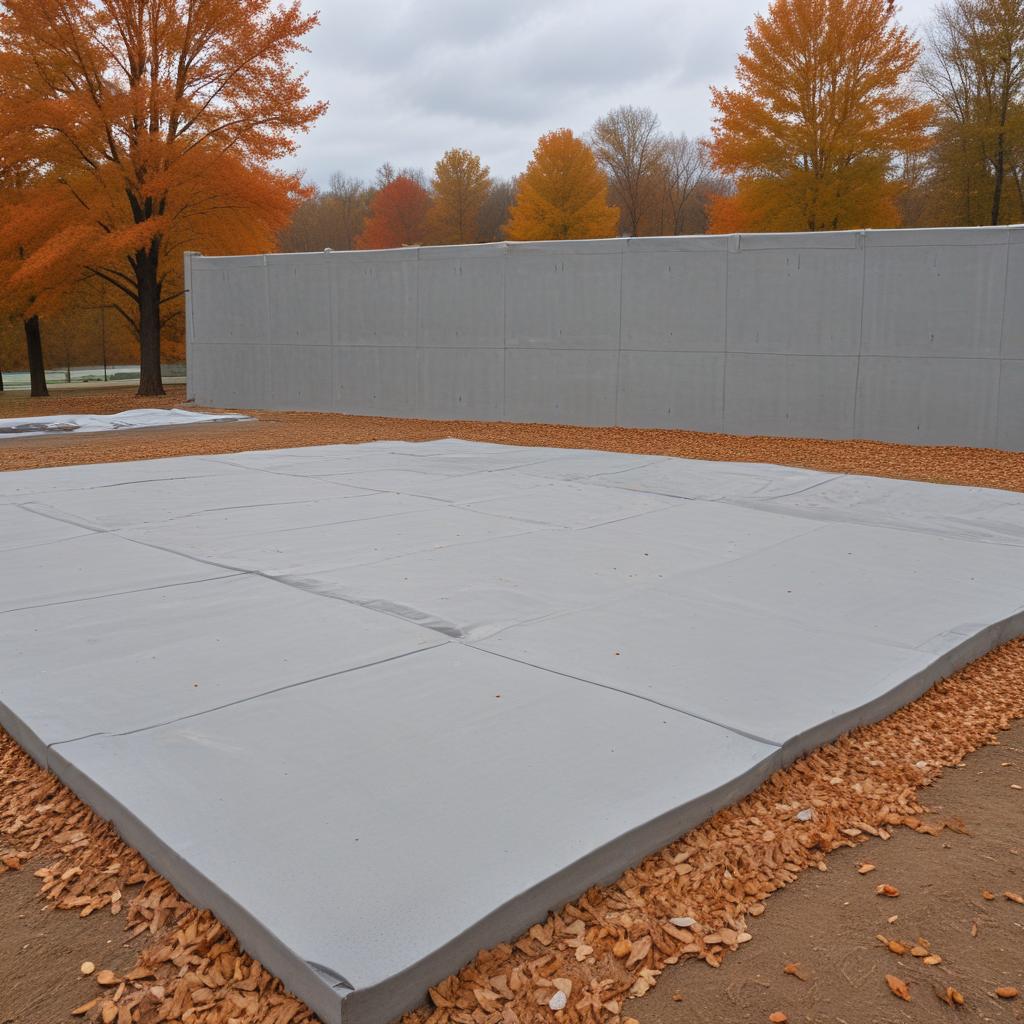
Cold-Weather Concrete and Masonry for Midstate Fall Nights
Mid-October is when Middle Tennessee crews still get productive daytime highs, but overnight lows start flirting with the temperatures that change how concrete, masonry mortar, and thin-set cure. The National Weather Service Nashville climate normals put October's average low near 50°F, with about one night at or below 32°F in a typical October, about eight in November, and about sixteen in December. The station's mean date for the first minimum of 32°F or colder is November 11, and early freezes have arrived as soon as early October.
That means the next few weeks are the right window to stop treating pours and masonry as "warm weather work" and start planning around the 40°F and 50°F thresholds that show up in the trade standards. This guide summarizes what ACI, masonry associations, and a major thin-set manufacturer say, and how that maps onto Midstate fall schedules. It is not a substitute for project specs, ready-mix advice, or manufacturer data sheets for the products on your order.
Why 40°F and 50°F matter more than the first hard freeze
Many crews wait for a frost warning before changing procedures. The concrete and masonry standards draw the line earlier.
The American Concrete Institute's Guide to Cold Weather Concreting (ACI 306R) treats cold weather as conditions when the air temperature has fallen to, or is expected to fall below, 40°F during the protection period after placement. The goal is not only to avoid a hard freeze overnight. It is to keep early-age concrete from losing strength and durability because hydration slowed or because free water froze inside the paste.
For masonry, the Concrete Masonry & Hardscapes Association (CMHA) TEK on all-weather construction and the Specification for Masonry Structures follow a similar idea. When ambient temperatures fall below 40°F, special construction and protection procedures apply. Mortar and grout hydrate much more slowly in the cold, and fresh mortar with a high water content can be damaged if it freezes before that water is reduced.
Thin-set mortar often sits at a still warmer threshold. Custom Building Products' VersaSet technical data sheet, for example, calls for ambient temperature to stay above 50°F and below 100°F for 72 hours to achieve a proper bond. That is an easy condition to miss on a Midstate October night when the afternoon feels fine for tiling but the house temperature drops after the crew leaves.
In short: if overnight lows are heading toward the upper 30s or low 40s, you are already in the planning zone for concrete and masonry. If interior spaces cannot hold above about 50°F, tile setting needs a different plan too.
Fresh concrete: protect until it can take a freeze
ACI's cold-weather objectives include preventing freeze damage at early ages, developing enough strength for form removal and loading, maintaining curing that supports strength gain, limiting rapid temperature swings, and protecting the finished durability of the member.
A widely cited practical marker, consistent with ACI discussion and Portland Cement Association summaries used in cold-weather bulletins, is that concrete that has reached about 500 psi compressive strength is generally past the point where a single freezing cycle destroys the paste. At about 50°F, many well-proportioned mixtures reach that strength in roughly 48 hours. Cooler concrete takes longer. That is why heated mixtures, accelerating admixtures (where the spec allows), insulation blankets, and enclosures show up in fall and winter pour plans.
Practical takeaways for Midstate slabs, footings, and flatwork as nights cool:
- Talk with the ready-mix producer before the forecast dips, not after the truck is loaded. Ask about mixture temperature on delivery, cement type, and whether an accelerator is appropriate for the pour.
- Do not place on frozen ground, ice, or snow. Cold subgrades pull heat out of the concrete and can create weak zones at the bottom of the slab.
- Plan protection before the pour: insulating blankets, forms left in place, wind breaks, and, when needed, heated enclosures. Corners and edges lose heat fastest and need the most attention.
- Monitor concrete temperature, not just the weather app. Surface and edge readings are what tell you whether protection is working.
- When protection comes off, remove it gradually. A sudden drop from a warm blanket or enclosure into cold air can stress the surface.
If the forecast shows a night near freezing within two days of a cold pour, treat protection as part of the pour cost, not an optional add-on.
Masonry and mortar when nights drop below 40°F
CMHA TEK 03-01C and related cold-weather masonry guidance walk through temperature bands that match how Midstate fall actually feels.
When temperatures are below 40°F, special procedures begin. Typical requirements in the masonry specification family include:
- Do not lay masonry on frozen surfaces or surfaces with snow or ice.
- Heat sand or mixing water as needed so mortar is mixed in the 40°F to 120°F range.
- Keep mortar above freezing until it is used in the wall.
- As temperatures fall further (into the low 30s and below), heat materials more aggressively, keep mortar warm until placement, and raise grout temperature targets at placement.
Protection after the wall is laid matters as much as mixing. Ungrouted masonry is commonly protected from freezing for about 24 hours. Grouted masonry often needs about 48 hours of protection unless the mix design and specification allow a shorter period with Type III cement or other approved measures. Covers, insulating blankets, and temporary heat are the tools crews use when overnight lows undercut those windows.
On a Midstate remodel or addition, that often means:
- Staging block, brick, and bagged mortar where they stay dry and above freezing before use.
- Scheduling shorter runs that can be covered the same afternoon.
- Having blankets and wind protection on site before a cool front, not after the first cold night surprises the crew.
- Watching wind. A 38°F night with a stiff breeze cools mortar joints faster than a still 38°F night.
Mortar that freezes while it still holds a high water content can lose bond and strength. The time to prevent that is during mixing, placement, and the first day or two of protection—not with a callback after the wall shows soft joints.
Thin-set and interior finish work in cooler, damper air
Tile and stone setting products are cementitious systems too, and manufacturer data sheets often set a higher comfort threshold than ACI's 40°F concreting trigger.
Custom's VersaSet sheet is a clear example used widely on residential and light commercial work: keep ambient conditions above 50°F for 72 hours for proper bond, and store product protected from freezing. Other thin-sets in the same product family carry similar temperature language. Rapid-setting products exist for cooler conditions, but they still need substrate and air temperatures within the range the manufacturer states—and a frozen substrate is always a stop.
For Midstate interiors in mid to late October:
- Confirm the space can hold temperature overnight. An unheated addition that drops into the 40s after the crew leaves may not meet a 50°F / 72-hour requirement even if daytime work felt fine.
- Acclimate bags and tile to the room temperature before mixing.
- Expect longer open time in cool rooms, but also slower strength gain. Do not rush grouting or traffic beyond what the data sheet allows for the temperatures you actually have.
- Keep bagged thin-set and grout off damp garage floors and out of unheated trailers where overnight freezes can ruin a pallet.
If the project still needs exterior masonry or flatwork while interiors are being finished, treat the two temperature regimes separately. A heated interior can support tile while the porch slab still needs blankets.
A Midstate mid-October checklist
Before the next cool stretch:
- Pull the 7-day forecast and mark any night at or below about 40°F during an open pour or masonry cure window.
- Confirm ready-mix or masonry mix temperature plans with suppliers the day before, not the morning of.
- Stage insulating blankets, poly, and fasteners where the crew can cover work before leaving the site.
- Keep bagged cement, mortar, and thin-set elevated, dry, and above freezing.
- For tile, verify the room holds above the manufacturer's minimum for the full cure window.
- Walk edges, corners, and windward walls—those are where cold damage shows up first.
Planning materials for cool-weather work
Cold-weather success is mostly preparation: the right bags and mixes on hand, protection materials staged, and deliveries timed so product is not sitting through a freeze unused. Music City Building Supply works with builders, remodelers, and contractors across Middle Tennessee. Call us at 615-385-7777 or stop by 504 Holtsford St in Lawrenceburg to talk through what you need for the next pour, masonry run, or interior finish phase.
Availability changes as surplus and wholesale lots move, so check with us on what is on hand rather than assuming a specific mix or accessory is in stock.
Sources
- National Weather Service Nashville, Nashville climate normals and first/last freeze dates (weather.gov/ohx/bnaclimate)
- American Concrete Institute, ACI 306R Guide to Cold Weather Concreting
- Portland Cement Association / industry cold-weather summaries citing the approximate 500 psi early-freeze threshold
- Concrete Masonry & Hardscapes Association, TEK 03-01C All-Weather Concrete Masonry Construction
- Specification for Masonry Structures cold-weather construction temperature procedures (as summarized in CMHA/industry cold-weather masonry guidance)
- Custom Building Products, VersaSet Economical Thin-Set Mortar technical data sheet (ambient temperature above 50°F for 72 hours)
Need materials for your next project?
We'll source it and get you a fast, no-obligation quote.