
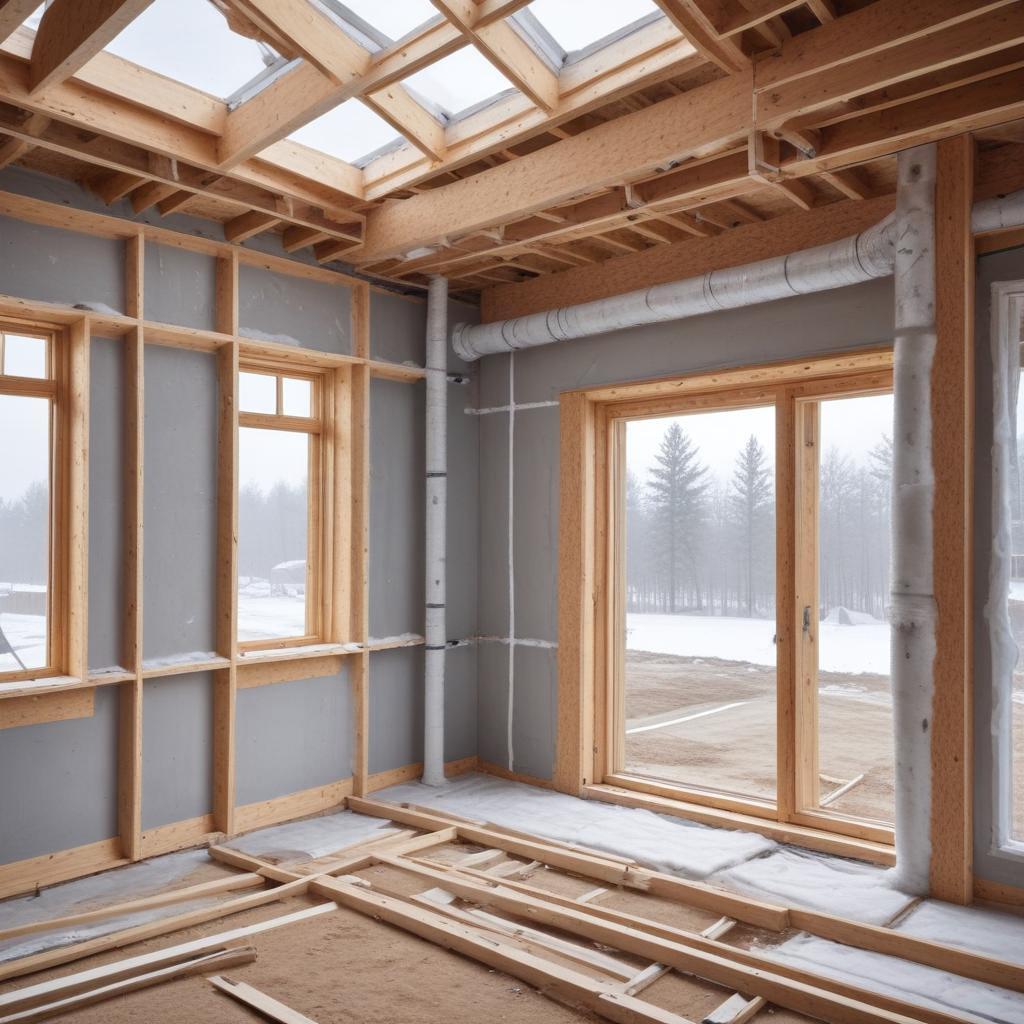
Before the First Hard Freeze: Protecting Water Lines on Middle Tennessee Builds and Vacant Remodels
Nashville's first freeze of the season is close. The National Weather Service's climate page for Nashville lists November 11 as the average date of the first fall low at or below 32°F, with a record range that runs from October 2 (1984) to November 29 (2024). For builders and remodelers in Middle Tennessee, that date matters less for the landscaping than for the plumbing: supply lines roughed into exterior walls, crawl spaces that are still open, hose bibbs on houses nobody lives in yet, and backflow assemblies sitting out in the wind.
This post walks through where water lines actually freeze on Midstate jobs, what the code asks for, what PEX will and won't forgive, and a practical checklist for vacant and under-construction houses before the first hard cold snap.
Why Southern Houses Freeze Pipes More Than You'd Expect
It sounds backwards, but a Nashville house can be more vulnerable to a frozen pipe than one in Chicago. The International Code Council's homeowner guide on freezing and bursting pipes makes the point directly: water pipes in houses in southern climates are often more vulnerable to winter cold spells because they're more likely to be located outside the building insulation, and owners are less aware of the problem when it only happens once or twice a season.
The Insurance Institute for Business & Home Safety (IBHS) says the same thing about regional building practice: plumbing along exterior walls is common in warmer regions, and crawl spaces and exterior hose spigots become vulnerable when temperatures drop below freezing.
That ICC guide also gives a useful number for the South. Based on research by the Building Research Council at the University of Illinois, it treats 20°F as the "temperature alert threshold" for uninsulated pipes in unconditioned attics. A survey of plumbers in southern states found burst-pipe calls started when temperatures fell into the teens. The same guide is clear that pipes can freeze above 20°F when cold air, especially moving air, reaches them through cracks or missing insulation. Wind matters: the guide notes that the wind-chill effect can speed up ice blockage in pipes.
So the planning rule for a Midstate job is simple. Treat any night forecast in the low 20s or teens as a plumbing event, and treat a windy night near 25°F as one too if lines are exposed.
Where Lines Freeze on Midstate Jobs
Metro Water Services lists the pipes that freeze most often in Nashville:
- Pipes exposed to severe cold, like outdoor hose bibs, swimming pool supply lines, sprinkler lines, and backflow preventers.
- Water supply pipes in unheated interior areas such as basements, crawl spaces, attics, garages, and kitchen cabinets.
- Pipes that run against exterior walls with little or no insulation.
On a construction or remodel site, add a few more to that list:
- Rough-in supply lines in exterior walls before insulation. Between rough plumbing inspection and insulation, those lines are sitting in an open stud bay with nothing but sheathing and house wrap between them and the weather.
- The service entry at the foundation. Metro Water notes that where the water service enters the home through the foundation is a likely place for a freeze. Rim joists and sill areas that haven't been air-sealed let cold air pour across that line.
- Crawl-space runs on open or vented crawls. Until the crawl is closed up, those lines see outdoor air.
- Temporary hose bibbs and yard hydrants used by trades during the build.
- Vacant flips and remodels with the heat off or set too low.
What the Code Requires
The International Residential Code covers this in section P2603.5. In areas with a winter design temperature of 32°F or lower, water, soil, and waste piping can't be installed outside the building, in exterior walls, in attics or crawl spaces, or anywhere else subject to freezing "unless adequate provision is made to protect it from freezing by insulation or heat or both." The same section requires water service pipe to be buried at least 12 inches deep and at least 6 inches below the frost line.
Notice what that section does not do. It doesn't name an R-value or a product. It's a performance requirement: the pipe has to be protected. Your local building department's adopted code edition and amendments control, so confirm the details with the jurisdiction you're building in, whether that's Metro Nashville, Williamson, Maury, Lawrence, or elsewhere.
One building-department interpretation of P2603.5 (published by the City of Marion, Iowa) adds a point every builder should remember for vacant houses: occupied buildings use the comfort heating system to help keep pipes from freezing, but where the air around the insulation stays cold for a long time, as in a vacant building, insulation alone won't do it. In that case water in the pipe will freeze regardless of the insulation, and heat has to be added, often as heat cable inside the insulation next to the pipe.
Best Practice: Keep Water Lines Inside the Insulation
The Department of Energy's Building Science Education guidance on pipes in exterior walls and InterNACHI's inspector guidance agree on the order of operations:
- Avoid running water lines in exterior walls or unconditioned attics when you can. Line fixtures up on interior walls where the layout allows.
- If a line has to go in an exterior wall, insulate the pipe, air-seal the cavity, and get insulation behind the pipe, between the pipe and the outside.
- Seal every hole through framing where the pipe passes, with caulk or foam.
InterNACHI's guidance gets specific on how to do that with batts: split the batt lengthwise, slide half behind the pipe, and fit the other half in front. Blown insulation or spray foam fills in behind the pipe on its own. Another option they describe is a piece of rigid foam cut to the cavity and adhered and sealed to the back of the cavity before the batt goes in front.
For pipe sleeves, the same guidance says to match the sleeve's inside diameter to the pipe's outside diameter for a snug fit, put the slit facing down, miter the joints at elbows, tape seams and joints, and secure the insulation every one to two feet.
The air-sealing step is what people skip. IBHS's winter bulletin notes that unsealed penetrations in an outside wall let cold air reach pipes, and that pipe size, pipe material, lack of heat, lack of insulation, and exposure to subfreezing airflow all affect whether a pipe bursts. A well-insulated line in a drafty bay can still freeze.
What PEX Will and Won't Forgive
A lot of Midstate supply plumbing is PEX now, and there's a common belief that PEX "can't freeze." The Plastics Pipe Institute (PPI), the industry's technical body, says otherwise in its technical report TR-52 on PEX's resistance to breakage when frozen:
- PEX does not prevent water from freezing. Its lower thermal conductivity can delay freezing compared with copper or steel.
- PEX stays flexible well below freezing, so a frozen water-filled PEX line typically expands without splitting and returns to size when it thaws, when it has room to expand evenly along its length, as it usually does in walls and ceilings.
- PEX that freezes inside a concrete slab or highly compacted soil may not be able to expand evenly and can split.
- PPI says plainly that PEX systems should not be intentionally subjected to freezing.
PPI's insulation recommendations for plastic pressure piping add another caution: even with room to expand, freezing can still produce internal pressures beyond what plastic or metal pipe can handle when ice forms a blockage or "dam." Fittings, valves, and connected fixtures don't necessarily share PEX's flexibility either.
The takeaway: PEX buys you margin, not immunity. Protect it like any other water line.
Heat Cable and Tape: Use the Right Kind
When insulation alone won't keep a line warm, usually in a vacant house, an exposed crawl, or a backflow assembly, heat cable is the tool. IBHS's guidance is to choose a heating cable with the UL label and a built-in thermostat that turns it on when needed, and to follow the manufacturer's instructions closely. A cable without a thermostat has to be plugged in every time and is easy to forget.
Two practical notes:
- Check compatibility with the pipe material. PPI's TR-52 says to check with the PEX manufacturer for specific approvals on using heat trace cable on its tubing. The same applies to CPVC and other plastics. Read the cable's listing and the pipe maker's instructions before you wrap.
- Insulate over it only as the cable maker allows. Some cables are designed to go under insulation and some aren't.
Thawing a Frozen Line Safely
If a line freezes anyway, Metro Water Services lays out the safe approach: keep the faucet open, and apply heat with an electric heating pad, an electric hair dryer, a portable space heater kept away from anything flammable, or towels soaked in hot water. Do not use a blowtorch, kerosene or propane heater, charcoal stove, or any other open flame. Keep applying heat until full pressure comes back, check every other faucet in the building, and call a licensed plumber if you can't find or reach the frozen section.
For PEX, PPI's TR-52 adds that you should not use an open flame, excessive heat, or an electric resistance pipe-thawing machine, and that pipe temperature during thawing should not exceed 180°F.
On a jobsite, "never an open flame" is worth repeating to every trade. A torch on a frozen line in a framed wall is a fire risk on top of a plumbing problem.
Pre-Freeze Checklist for Vacant and Under-Construction Houses
Use this before the first forecast low in the 20s:
- Know who owns which pipe. Metro Water Services owns and maintains the meter, meter box, and fittings inside it. The owner is responsible for the service from the meter box to the structure, plus any backflow prevention and pressure-reducing devices on the customer side. MWS also says it can't respond to private plumbing issues, so line up a plumber before the cold arrives.
- Find and test the main shut-off. Metro Water recommends locating the inside shut-off valve and actually testing it. On a job, mark it so any trade can find it fast.
- Insulate and, if needed, heat backflow preventers. Metro Water specifically calls for insulating backflow preventers and providing a heater if necessary.
- Shut off and drain exterior lines. IBHS recommends shutting off and draining pipes that lead outside at the start of winter, and having a plumber add an interior shut-off where an exterior faucet doesn't have one. Cover hose bibbs.
- Drain irrigation. Metro Water lists draining seasonal irrigation systems before temperatures drop.
- Close up the crawl. Metro Water advises closing crawl-space vents to protect pipes. On new work, get the crawl closed or the lines protected before the first hard freeze.
- Keep heat on in conditioned shells. Metro Water's guidance is to leave the heat on at no lower than 55°F when a property is unoccupied in cold weather, and to keep the thermostat the same day and night. If you're running temporary heat, follow the safe-use and ventilation guidance for that equipment.
- Drip exposed fixtures in hard cold. Metro Water says even a trickle through a pipe served by exposed lines helps prevent freezing. IBHS notes that a dripping faucet also relieves pressure between an ice blockage and the faucet if freezing does start.
- Open cabinet doors on sink walls that sit against exterior walls, so room air can reach the plumbing.
- Air-seal rim joists and penetrations around the service entry and any wall that carries a supply line.
- Consider monitoring. IBHS suggests a low-temperature alert for the building and an automatic excess flow valve on the main line to catch a break early. For a vacant flip, a remote temperature sensor is cheap insurance.
- If the house will sit empty and unheated, drain it. IBHS recommends shutting off the main and draining accessible lines if a property will be unoccupied for more than a week in freezing weather.
Plan the Materials Now, Not the Night of the Freeze
The week before a hard freeze is when everyone in Middle Tennessee goes looking for pipe insulation and hose-bibb covers at the same time. If you've got houses in rough-in, vacant remodels, or open crawls on the books for November, build freeze protection into the materials list now: pipe sleeves sized to the actual pipe, sealant or foam for penetrations, cavity insulation to get behind exterior-wall runs, covers for exterior faucets, and heat cable that's listed and approved for the pipe you're using.
Music City Building Supply works with builders and remodelers across Middle Tennessee. Visit us at 504 Holtsford St in Lawrenceburg, or reach out to our team to talk through your materials list before the cold sets in.
Sources
- National Weather Service Nashville, Nashville Climate Records (average and record first fall freeze dates).
- International Code Council, "Freezing and Bursting Pipes" homeowner guide (20°F alert threshold, University of Illinois Building Research Council research).
- Insurance Institute for Business & Home Safety, Winter Weather Ready guidance and Commercial Risk Engineering Bulletin: Winter Weather.
- International Residential Code, Section P2603.5 Freezing.
- City of Marion, Iowa, code interpretation of P2603.5 water line protection (vacant buildings need heat, not insulation alone).
- U.S. Department of Energy, Building Science Education, "Pipes in Exterior Walls."
- InterNACHI, "Inspecting Pipes in Exterior Walls and Pipe Insulation."
- Plastics Pipe Institute, TR-52 "Resistance of PEX Pipe to Breakage When Frozen" and TN-65 insulation recommendations for plastic pressure piping.
- Metro Water Services (Nashville.gov), cold-weather plumbing guidance and customer service-line responsibilities.
Need materials for your next project?
We'll source it and get you a fast, no-obligation quote.